Evidence and Interim Payment Applications - Edward Bishop QC, 1 Chancery Lane
09/05/16. The High Court has given useful guidance (which serves as a warning) to defendants on their evidential obligations when defending applications for interim payments.
In Sellar-Elliot v Howling [2016] EWHC 443 (QB) Sweeney J refused permission to appeal an interim payment order by Master Cook and held that it was not enough for a defendant to rely – when defending an application for an interim payment – on the defence (supported by a statement of truth) and a witness statement from a solicitor confirming that expert evidence supporting the defence had been obtained.
The defendant must go further and provide the court with some reasoned response to the claimant’s expert evidence (which had been unilaterally served to support the application in this case). Even though – in accordance with court directions – the defendant had since served expert evidence disputing the claimant’s points, the court had to judge the interim payment application on the evidence before it at the time of the application. In other words, and drawing on the Court of Appeal’s decision in Test Claimants in the FII Group Litigation v Revenue and Customs Comrs (No 2) [2012] 1 WLR 2375, the court must be satisfied that if the case went to trial on the material before the judge at the time of the application that the claimant would succeed and would obtain a substantial amount of money.
Defendants therefore bear an evidential burden “to raise matters, on the basis of evidence, which would justify the court in concluding that a claimant would not succeed in obtaining substantial damages” Sweeney J held that:
“…the mere fact that the Defendant’s causation case was supported by reputable expert opinion, and that the Defendant’s expert would dispute the Claimant’s expert evidence at trial, did not mean that, on the evidence, the Claimant had failed to persuade [Master Cook] that the requisite test was met”
The message for defendants would seem to be therefore that when a claimant chooses unilaterally to serve expert evidence to support an interim payment application, defendants must serve an argued and detailed expert response, even when the court has already directed that expert evidence is scheduled to be disclosed at a later date
The case is on Bailli:http://www.bailii.org/cgi-bin/markup.cgi?doc=/ew/cases/EWHC/QB/2016/443.html&query=title+(+Sellar-Elliott+)+and+title+(+v+)+and+title+(+Howling+)&method=boolean
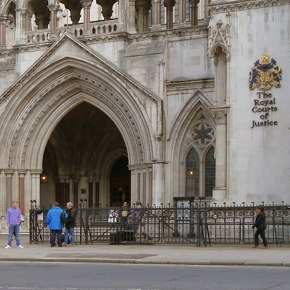
Image cc David Dixon






![Appeal judge rules that credit hire company has no costs liability following a finding of fundamental dishonesty in personal injury case: RSA v. Fastrack Solutions Limited [2023] 4 WLUK 92 - David Bowden, Erimus Chambers](/content/images/resized/images/stories/carkeys_72_72.jpg)


